
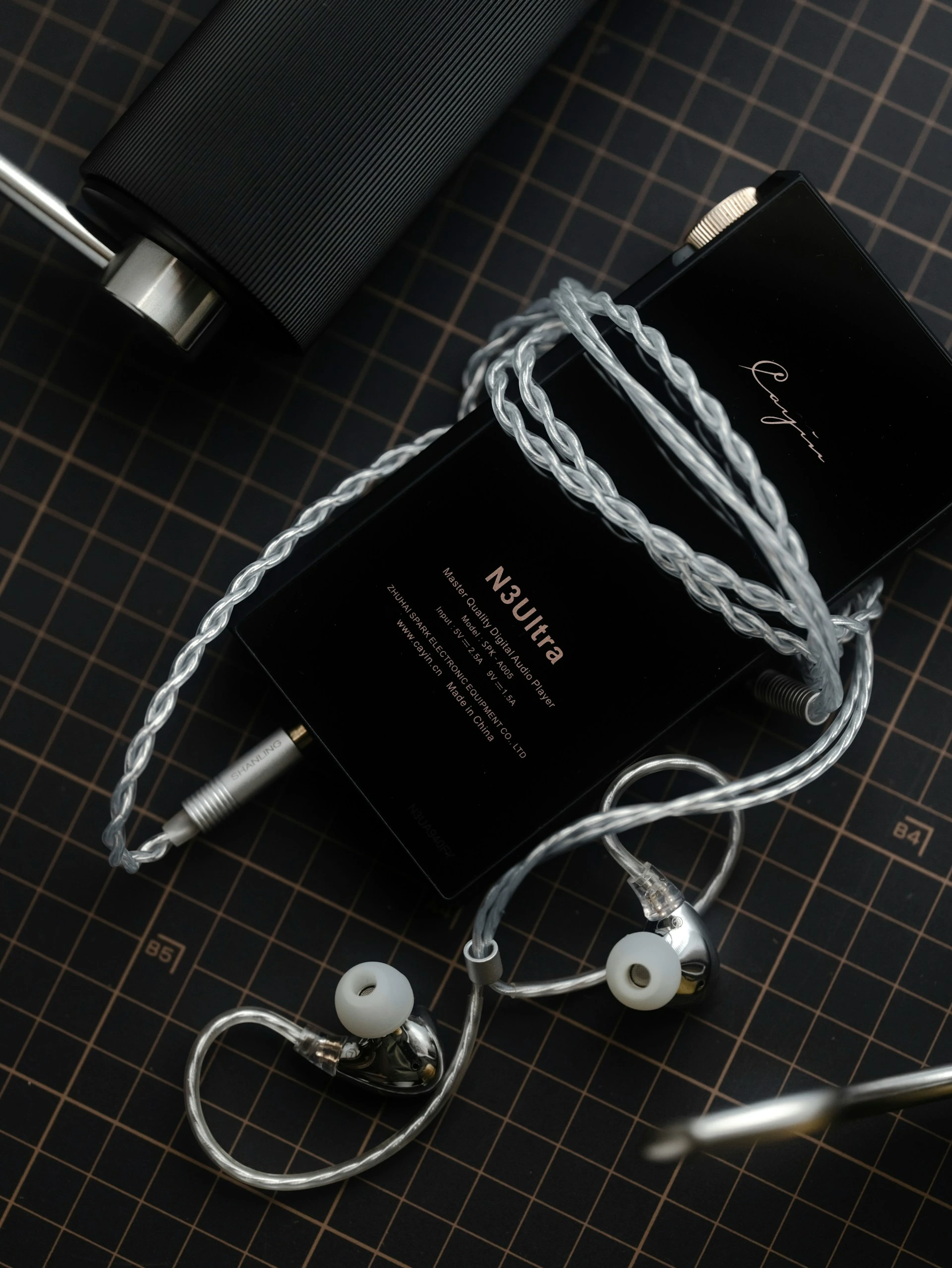
If you are looking for better sound without spending a huge amount of money, IEMs (In-Ear Monitors) are a great place to start. Unlike regular earbuds, IEMs are designed to sit securely inside the ear canal and can provide better isolation, detail, and sound quality.
However, choosing your first IEM can be confusing. There are many brands, drivers, specifications, and sound signatures to consider.
This beginner-friendly guide explains what IEMs are, what to look for, and how to choose one that suits your listening habits.
What Is an IEM?
IEM stands for In-Ear Monitor. These earphones were originally designed for musicians and performers who needed to hear audio clearly while performing on stage.
Today, IEMs are popular among music listeners, gamers, audio enthusiasts, and people who simply want better sound quality.
Most IEMs use a cable that connects to each earpiece and fit directly into the ear. Many models also use detachable cables, making them easier to replace or upgrade.
Why Choose an IEM?
The biggest advantage of an IEM is its ability to deliver detailed sound in a compact design.
Some common benefits include:
- Better passive noise isolation
- Clearer vocals and instruments
- More detailed sound
- Secure fit during movement
- Replaceable cables on many models
- Multiple ear-tip options
- Wide range of prices
For beginners, affordable IEMs can already provide a noticeable improvement over basic earphones.
Understanding Sound Signature
Before buying an IEM, it is useful to understand the term sound signature.
Different IEMs emphasize different parts of the frequency range.
| Sound Signature | Characteristics | Suitable For |
|---|---|---|
| Balanced | Natural combination of bass, mids and treble | General listening |
| V-Shaped | Stronger bass and treble | Pop, movies, energetic music |
| Bass-heavy | Powerful low frequencies | EDM, hip-hop |
| Neutral | Accurate and relatively natural | Vocals, classical, instruments |
| Bright | More emphasis on higher frequencies | Detail and instrument separation |
| Warm | Smooth and fuller presentation | Relaxed listening |
For a first IEM, a balanced or mildly V-shaped sound is often easier to enjoy across different types of music.
Single Driver vs Multiple Drivers
You may notice that some IEMs advertise one driver while others contain multiple drivers.
A driver is the component responsible for converting electrical signals into sound.
Common types include:
Dynamic Driver
Dynamic drivers are widely used and are known for producing strong and natural bass.
Balanced Armature
Balanced-armature drivers are often used to reproduce detailed mids and treble.
Planar Magnetic
Planar drivers use a different design and can provide detailed and controlled sound, although they may require more power depending on the model.
However, more drivers do not automatically mean better sound. Tuning, driver implementation, acoustic design, and quality control can be just as important.
Fit Matters More Than You Think
Even an excellent IEM can sound disappointing if it does not fit properly.
A good seal helps with:
- Bass response
- Noise isolation
- Comfort
- Overall sound quality
Most IEMs come with several sizes of silicone ear tips. Some models also offer foam tips.
Try different tip sizes to find the one that provides a secure but comfortable seal.
Wired vs Wireless IEMs
Most traditional IEMs are wired.
Wired IEMs
Advantages:
- No battery required
- Consistent connection
- Often better value for sound quality
- Replaceable cables on many models
Disadvantages:
- Cable can be inconvenient
- Requires a compatible audio connection
Wireless IEMs
Wireless IEMs provide greater convenience and are useful for people who prefer a cable-free setup.
However, if your main priority is sound quality and value, wired IEMs are worth considering, especially at lower budgets.
Do You Need an Amplifier?
For most beginner IEMs, you usually don’t need a separate amplifier.
Many modern IEMs can be driven easily by smartphones, laptops, tablets, and USB-C DAC adapters.
A dedicated DAC or amplifier can be useful in certain setups, but it should not be the first thing a beginner worries about.
It is generally better to spend money on a good IEM and comfortable ear tips first.
What Should Beginners Check Before Buying?
Before purchasing your first IEM, consider these factors:
1. Sound Preference
Think about what you listen to most.
Do you prefer strong bass, clear vocals, or detailed instruments?
2. Comfort
An IEM can sound great but become frustrating if it is uncomfortable after 30 minutes.
3. Cable
A detachable cable is useful because it can be replaced if damaged.
4. Ear Tips
Multiple ear-tip sizes make it easier to achieve a proper fit.
5. Build Quality
Look for a well-built shell and reliable cable connectors.
6. Device Compatibility
Check whether your phone, laptop, or music player has a suitable audio connection.
7. Reviews
Don’t rely only on specifications. Sound quality is strongly influenced by tuning, so listening impressions and measurements can be useful.
Common Beginner Mistakes
Many first-time buyers make the mistake of choosing an IEM based only on the number of drivers or specifications.
Avoid these mistakes:
Buying based only on driver count: More drivers don’t automatically mean better sound.
Ignoring fit: Poor fit can significantly affect sound quality.
Choosing excessive bass: Strong bass can be enjoyable, but too much can overpower vocals and instruments.
Ignoring comfort: A good-sounding IEM is not useful if you cannot comfortably wear it.
Spending too much immediately: You don’t need an expensive IEM to start exploring the hobby.
How Much Should You Spend?
You can find entry-level IEMs at relatively affordable prices, making them accessible to beginners.
| Budget | Beginner Focus |
|---|---|
| Under ₹1,000 | Basic introduction to IEMs |
| ₹1,000–₹2,000 | Better tuning and build options |
| ₹2,000–₹5,000 | More refined sound and wider choices |
| ₹5,000+ | Advanced options for enthusiasts |