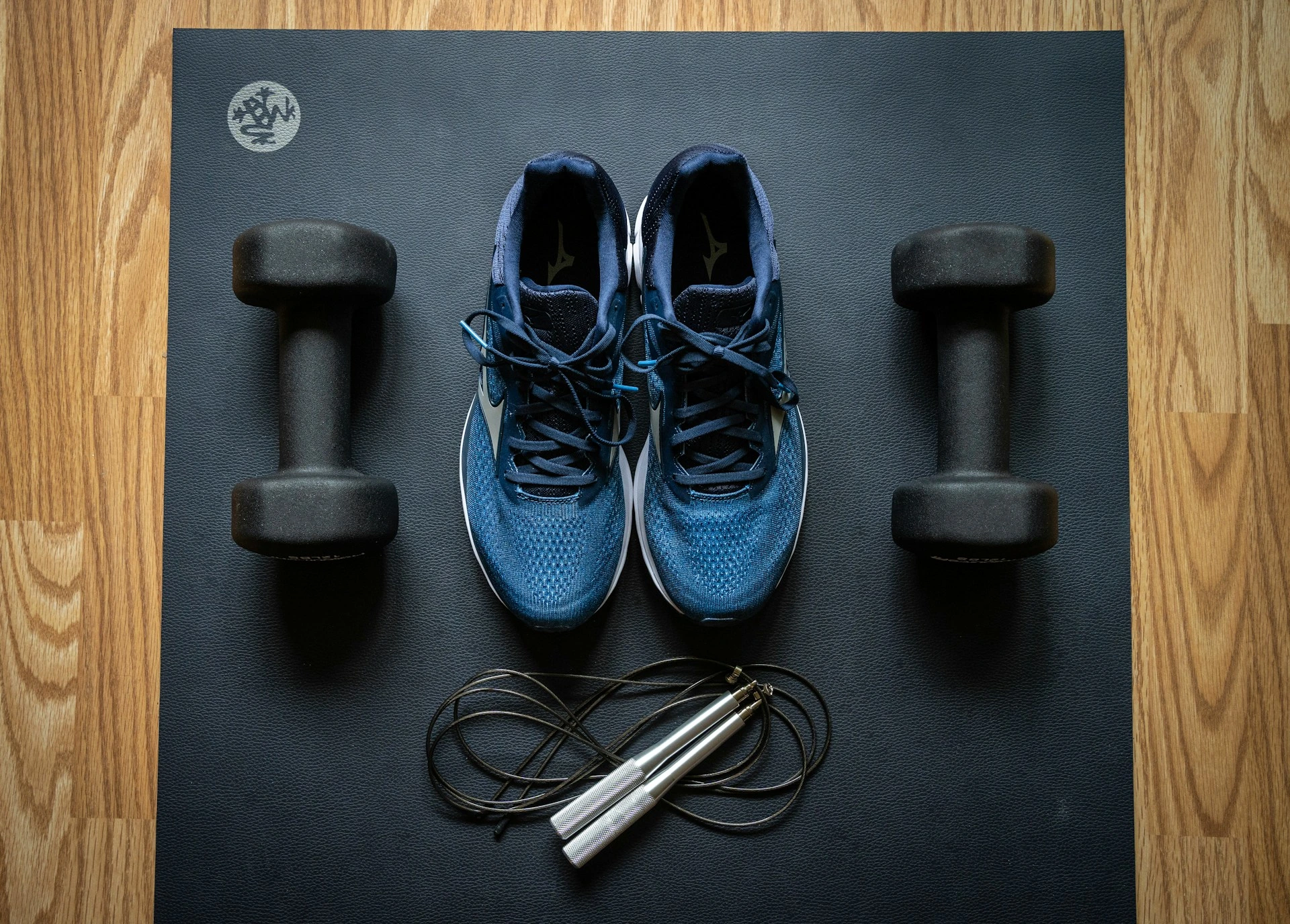
Creating a home workout space can make exercising more convenient. You don’t need a large room filled with expensive machines to get started. The right equipment depends on your fitness goals, available space, budget, and the type of workouts you enjoy.
With so many dumbbells, resistance bands, treadmills, exercise bikes, benches, and other fitness products available online, choosing the right equipment can sometimes be confusing.
Before buying fitness equipment for your home, consider these important factors.
1. Start With Your Fitness Goals
The first step is to decide what you want to achieve.
Your equipment requirements will be different depending on your goals.
| Fitness Goal | Equipment to Consider |
|---|---|
| General fitness | Yoga mat, resistance bands, dumbbells |
| Strength training | Dumbbells, kettlebells, resistance bands |
| Cardio | Treadmill, exercise bike, skipping rope |
| Flexibility | Yoga mat, stretching accessories |
| Home workouts | Adjustable dumbbells, resistance bands |
| Muscle building | Weights, bench, resistance equipment |
| Low-impact exercise | Exercise bike, walking pad, resistance bands |
Having a clear goal prevents you from purchasing equipment that you rarely use.
2. Consider the Space Available
Measure your workout area before buying large equipment.
Check:
- Available floor space
- Ceiling height
- Equipment dimensions
- Storage space
- Doorway width
- Distance from walls and furniture
- Flooring requirements
For a small apartment, compact and foldable equipment can be more practical.
For example, adjustable dumbbells or resistance bands can provide several workout options without taking up the space required by a large machine.
3. Choose Equipment Based on Your Workout Style
Think about the type of exercise you actually enjoy.
If you prefer strength training, weights and resistance equipment may be useful. If you enjoy cardio, you may prefer a treadmill, exercise bike, or skipping rope.
There is little value in purchasing expensive equipment if you don’t enjoy using it.
Choose equipment that fits naturally into your routine.
4. Check the Equipment’s Weight and Size
For products such as dumbbells, kettlebells, benches, and machines, check the exact dimensions and weight before ordering.
For example, adjustable equipment may save space, but it can also be heavier or more complicated to move.
Always check the product specifications rather than estimating its size from photographs.
5. Consider Adjustable Equipment
Adjustable equipment can be useful when space is limited.
For example, adjustable dumbbells can replace several individual pairs of weights, while adjustable benches can support different types of exercises.
Other space-saving options include:
- Resistance bands with different resistance levels
- Foldable benches
- Adjustable kettlebells
- Compact exercise bikes
- Foldable treadmills
- Door-mounted accessories
The goal is to get multiple uses from a smaller amount of equipment.
6. Check Build Quality and Materials
Fitness equipment is regularly exposed to movement, pressure, and repeated use, so build quality matters.
Before buying, check:
- Frame material
- Weight capacity
- Handle construction
- Grip quality
- Base stability
- Stitching on accessories
- Moving components
- Product warranty
For larger equipment, a stable frame and appropriate weight capacity are particularly important.
7. Check the Maximum Weight Capacity
Always check the manufacturer’s recommended weight limit.
This is particularly important for:
- Weight benches
- Exercise bikes
- Treadmills
- Pull-up equipment
- Home gym machines
Do not assume that two products with similar appearances have the same weight capacity.
The manufacturer’s specifications should be your primary reference.
8. Think About Storage
Home fitness equipment should be easy to store when it isn’t being used.
If you have limited space, consider products that can be:
- Folded
- Disassembled
- Stored vertically
- Placed under furniture
- Hung on a wall
- Kept inside a storage cabinet
A compact storage solution can make it easier to maintain a regular workout routine.
9. Compare the Total Cost
The equipment’s listed price is not always the complete cost.
Consider:
- Product price
- Delivery charges
- Installation
- Accessories
- Replacement parts
- Maintenance
- Warranty
- Storage requirements
For example, a treadmill may require more space and maintenance than a skipping rope or resistance band set.
Think about the long-term cost rather than only the initial purchase price.
10. Read Customer Reviews
Reviews can provide useful information about how equipment performs in real homes.
Look for comments about:
- Stability
- Noise
- Durability
- Assembly
- Comfort
- Ease of use
- Storage
- Product quality
For larger equipment, reviews can also help you understand whether the product is suitable for apartments or smaller rooms.
Pay attention to repeated feedback rather than relying on a single review.
11. Check Assembly and Installation
Some fitness equipment can be used immediately, while larger products may require assembly.
Before purchasing, check:
- Whether assembly is required
- Whether tools are included
- Whether professional installation is available
- Assembly charges
- Assembly instructions
If you are buying a large machine, make sure you have enough space to assemble and position it safely.
12. Look at Safety Features
Safety should be an important consideration when purchasing home fitness equipment.
Depending on the product, check for:
- Non-slip surfaces
- Stable bases
- Secure locking mechanisms
- Emergency stop features
- Appropriate weight limits
- Comfortable grips
- Protective padding
For moving equipment such as treadmills and exercise bikes, understand how the safety features work before using the product.
13. Check Warranty and After-Sales Service
Fitness equipment can contain mechanical or electronic components that may require service.
Before buying, check:
- Warranty duration
- What components are covered
- Availability of replacement parts
- Customer support
- Service availability
- Repair process
For expensive equipment, reliable after-sales support can be particularly important.
Quick Fitness Equipment Buying Checklist
| What to Check | Why It Matters |
|---|---|
| Fitness goal | Helps select useful equipment |
| Available space | Ensures the product fits your home |
| Equipment size | Makes storage easier |
| Weight capacity | Important for safe use |
| Build quality | Affects durability |
| Adjustability | Provides more workout options |
| Storage | Useful for smaller homes |
| Safety features | Helps reduce avoidable risks |
| Reviews | Shows real-world experiences |
| Assembly | Helps plan installation |
| Warranty | Provides product support |
| Total cost | Helps manage your budget |
Simple Equipment Ideas for Different Homes
For a Small Apartment
Consider compact products such as:
- Resistance bands
- Yoga mat
- Adjustable dumbbells
- Skipping rope
- Compact kettlebell
These can provide several workout options without requiring a dedicated gym room.
For a Larger Home
If you have more space, you can consider:
- Weight bench
- Dumbbell rack
- Treadmill
- Exercise bike
- Multi-gym equipment
- Larger strength-training setups
Make sure the equipment still leaves enough room to move around safely.
For Beginners
You don’t need to purchase everything at once.
A simple starting setup could include:
- Exercise mat
- Resistance bands
- A suitable pair of dumbbells
- Skipping rope
You can gradually add equipment as your fitness routine develops.
Final Thoughts
Choosing fitness equipment for your home is not about buying the most expensive machine or building a complete gym immediately. The right equipment should match your fitness goals, available space, workout style, budget, and experience level.
Before ordering online, compare specifications, weight limits, reviews, warranty, safety features, and storage requirements. Most importantly, choose equipment that you are comfortable using regularly.
A smaller collection of practical equipment that fits your routine can be more useful than a large collection of products that sits unused.