Imagine running out of milk while preparing breakfast, needing a packet of snacks before guests arrive, or discovering that you have forgotten an essential household item. A few years ago, the usual solution would have been a trip to the nearest store. Today, in many cities, customers can open an app, place an order, and receive everyday products within a very short time.
This is the idea behind quick commerce, often called q-commerce.
Quick commerce has changed the traditional online shopping model by focusing on speed and convenience. Instead of waiting hours or days for an order, customers can purchase groceries, beverages, personal-care products, household supplies, and other essentials for rapid delivery.
But how does a delivery reach a customer’s doorstep so quickly?
1. What Is Quick Commerce?
Quick commerce is a form of online retail designed for the rapid delivery of everyday products.
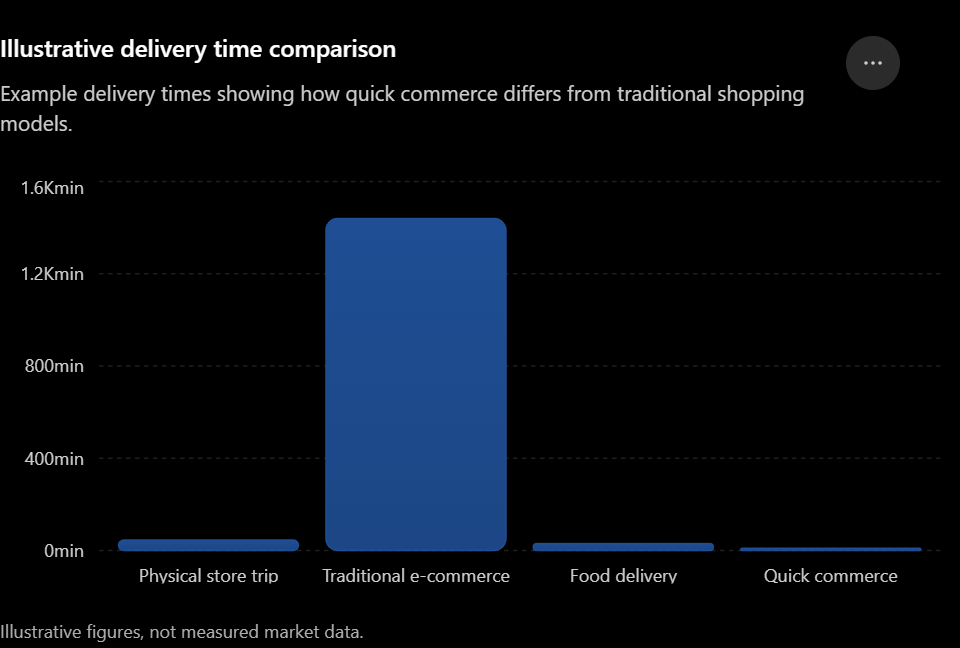
Traditional e-commerce generally focuses on a large product catalogue and scheduled delivery. Quick commerce works differently. It keeps frequently purchased products close to customers so that orders can be processed and delivered quickly.
The basic process looks like this:
Customer places order → Nearby fulfilment centre receives order → Items are picked → Order is packed → Delivery partner collects it → Order reaches customer
The entire process is designed to minimise unnecessary time at every stage.
2. Small Fulfilment Centres Are at the Centre
One of the most important parts of quick commerce is the use of small fulfilment centres, often called dark stores or micro-fulfilment centres.
Unlike traditional supermarkets, these locations are primarily designed to process online orders. Customers generally do not visit them to shop.
They are positioned in or near areas with high customer demand. Because products are stored close to customers, delivery partners can travel shorter distances.
This localised network is one of the major reasons rapid delivery is possible.
3. Technology Connects the Entire Process
Technology plays an important role in coordinating quick-commerce operations.
When a customer places an order, the platform needs to determine several things almost immediately:
- Which fulfilment centre has the products?
- Is the inventory actually available?
- Which worker should pick the items?
- How should the order be packed?
- Which delivery partner should collect it?
- What route should the delivery partner take?
Software systems coordinate these steps in real time.
Inventory-management systems help platforms track product availability, while order-management systems process incoming purchases. Delivery systems then help assign orders to available delivery partners.
4. Product Selection Is Carefully Planned
Quick-commerce platforms cannot stock every product available in a large supermarket.
Instead, they generally focus on products that customers frequently purchase or may need quickly.
| Product Category | Typical Examples |
|---|---|
| Dairy | Milk, curd, butter |
| Fresh produce | Fruits and vegetables |
| Staples | Rice, flour, pulses |
| Snacks | Biscuits, chips, chocolates |
| Beverages | Water, juice, soft drinks |
| Personal care | Soap, shampoo, toothpaste |
| Household | Detergent, tissues, cleaners |
| Baby care | Diapers, wipes |
The exact selection varies according to the location and customer demand.
5. Inventory Has to Be Available Nearby
Speed is not possible if the product is stored far away.
Quick-commerce businesses therefore rely heavily on local inventory management. Data about customer orders can help businesses understand which products are popular in particular areas.
For example, one neighbourhood may have high demand for fresh produce, while another may have greater demand for snacks, beverages, or household products.
Keeping the right products in the right fulfilment centre helps reduce situations where customers place an order only to discover that the item is unavailable.
6. Picking and Packing Are Designed for Speed
Once an order arrives, workers at the fulfilment centre need to locate the products quickly.
The layout of the facility is therefore important. Frequently ordered products can be positioned where they are easier to access.
A simplified process looks like:
Order received → Product location identified → Items picked → Items checked → Bag packed → Delivery partner notified
Reducing the distance workers have to travel inside the fulfilment centre can save valuable time across thousands of orders.
7. Delivery Partners Complete the Last Mile
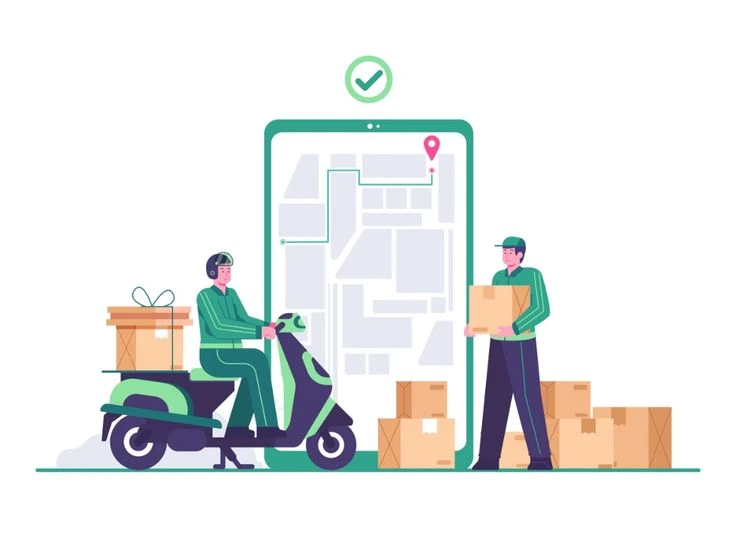
After an order is packed, it moves into the last-mile delivery stage.
The delivery partner collects the package and takes it to the customer’s location.
Because fulfilment centres are positioned relatively close to customers, the delivery distance can be shorter than conventional e-commerce delivery routes.
Traffic, weather, road conditions, building access, and order volume can still affect delivery times, so the advertised delivery window is not guaranteed to be identical for every order.
8. Data Helps Predict Customer Demand
Quick commerce depends heavily on data.
Platforms can analyse information such as:
- Frequently purchased products
- Popular shopping times
- Seasonal demand
- Local purchasing patterns
- Product availability
- Order frequency
- Delivery performance
This information can help businesses decide how much inventory to keep at different locations.
For example, demand for cold beverages may increase during hot weather. Similarly, certain products may experience higher demand during festivals or special occasions.
9. Why 10-Minute Delivery Is Possible
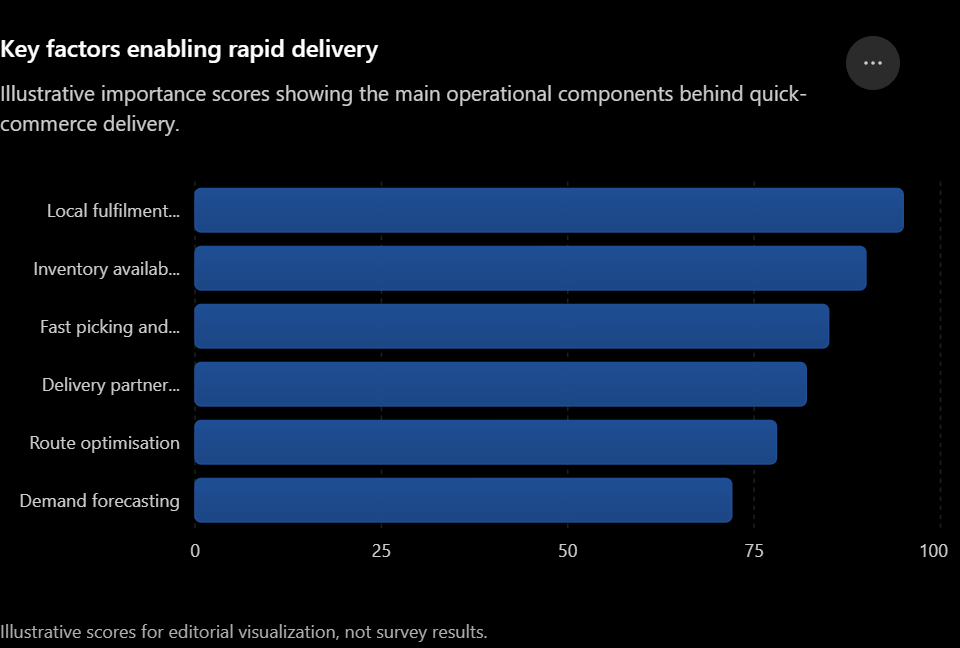
The speed of quick commerce does not come from one technology. It comes from combining several operational decisions.
| Factor | How It Helps |
|---|---|
| Local fulfilment centres | Keeps products close to customers |
| Limited product selection | Makes inventory easier to manage |
| Inventory tracking | Shows what is available |
| Optimised layouts | Speeds up product picking |
| Digital ordering | Sends orders instantly |
| Automated systems | Coordinates operations |
| Nearby delivery partners | Reduces travel distance |
| Data analysis | Helps predict demand |
Together, these components create a system designed around rapid fulfilment.
10. The Business Challenge Behind the Speed
Fast delivery sounds simple from the customer’s perspective, but it requires significant operational coordination.
Businesses need to balance inventory costs, warehouse operations, delivery expenses, employee productivity, product availability, and customer demand.
Keeping too much inventory can increase costs. Keeping too little can lead to unavailable products.
Similarly, having too few delivery partners can cause delays during busy periods, while maintaining excess delivery capacity can increase operating costs.
This makes demand forecasting and operational efficiency particularly important for quick-commerce companies.
Quick Commerce vs Traditional E-Commerce
| Feature | Traditional E-Commerce | Quick Commerce |
|---|---|---|
| Main focus | Wide selection | Speed and convenience |
| Delivery | Often hours to days | Very short delivery windows |
| Warehousing | Larger warehouses | Local fulfilment centres |
| Product range | Usually very large | More focused |
| Customer need | Planned purchases | Planned and immediate purchases |
| Delivery distance | Can be longer | Usually designed around local areas |
| Inventory strategy | Centralised | More localised |
| Technology | Order and logistics systems | Real-time order, inventory and delivery coordination |
Challenges of 10-Minute Delivery
Rapid delivery also creates challenges.
Operating multiple local fulfilment centres can be expensive. Businesses must maintain sufficient inventory while controlling wastage and storage costs.
Fresh products create another challenge because they have limited shelf lives. Demand forecasting therefore becomes particularly important.
There are also practical limitations. Traffic, severe weather, high order volumes, unavailable products, and difficult delivery locations can affect delivery times.
For customers, the fastest option may not always be the cheapest option either. Delivery fees, minimum-order requirements, and product prices should be considered when comparing shopping options.
The Future of Quick Commerce
Quick commerce is moving beyond the simple idea of delivering groceries quickly. The model can potentially support a wider range of everyday purchases, including personal-care products, household supplies, stationery, electronics accessories, and other frequently needed items.
As technology improves, businesses may use better demand forecasting, automated inventory systems, route optimisation, and increasingly efficient fulfilment operations.
The goal is not simply to reduce delivery time from 20 minutes to 10 minutes. The larger objective is to create a retail system in which customers can easily obtain everyday products when they need them.